First Mass-Produced Calculators (Analog)
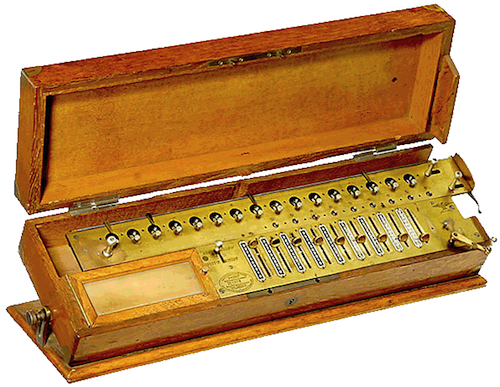
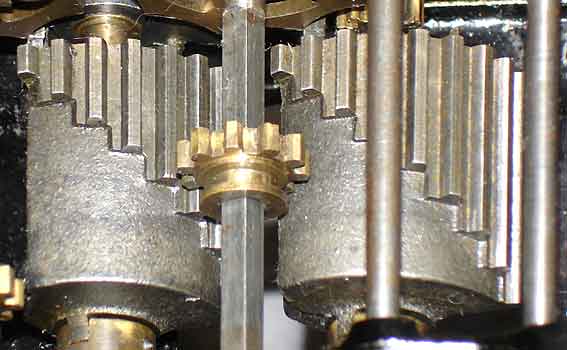
1820 Thomas de Colmar developed the first mass-produced calculator; it was called the Arithmometer. The Arithmometer was very much so a computer that exhibited the simple needs of the people in Colmar's time. It prooved useful for banks, insurance companies, and observatories. At the heart of the Arithmometer was a Leibniz wheel, a fundamental piece to many mechanical calculators. The Arithmometer could perform the basic math operations: addition, subtraction, division, and multiplication.
|
|
|---|
Analytical Engine (Digital)
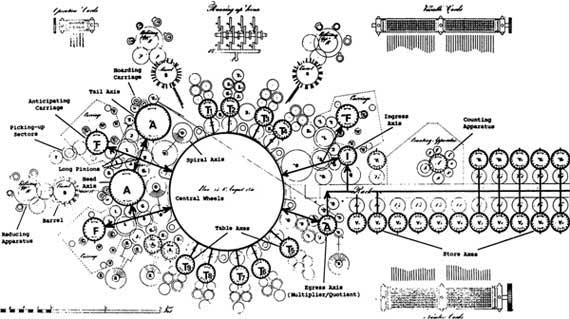
1834 The Analytical Engine was a milestone in computer design, for it showed characteristics of a digital computer of our time. Although it was not supplied with electricity, it offered programmability through punched cards, similar in concept to the punched cards used for computers in the mid 1900s. The creator of the Analytical Engine, Charles Babbage, was never able to complete the computer, primarily due to insufficient funding. However, the design garners the attention of many computer enthusiasts, for it utilizes digital concepts in such an early time period.
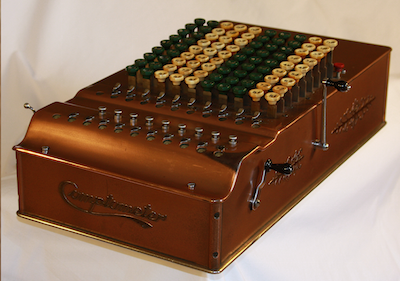
Felt and Tarrant Comptometer (Analog)
1887 One of the most successful commercial adding calculators of its time, the Felt and Tarrant Comptometer was used in many office related occupations such as accounting. The Felt and Tarrant Comptometer had a unique feature that allowed the operator to press his or her fingers simultaneously on the levers, making calculations much faster compared to calculations of other calculators. Soon after the unveiling of the Felt and Tarrant Comptometer, courses covering operation became prevalent as certain jobs required adept operators.