Apple II (Digital)
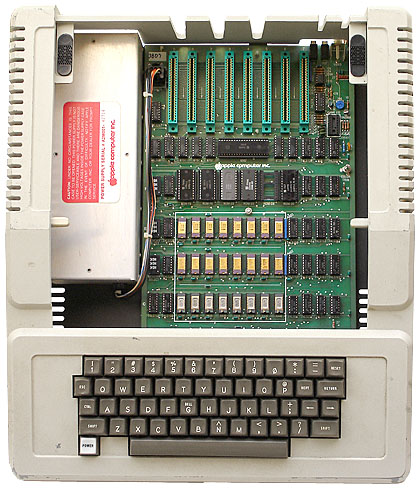
1977 Probably one of the most popular computers ever made in the late 1900s, the Apple II was a success. The new idea of a computer being user-friendly struck a chord with people. The only aspect of the Apple II going against it was the price: $1,298 for 4KB of RAM (full system). However, many people greatly appreciated the great features of the Apple II. One of the best features was the eight internal expansion slots, which enabled the computer to be optimized with different expansion cards. These expansion cards were process accelerators, memory expansions, and floppy disk controllers to name a few. Another great feature of the Apple II was the VisiCalc program. This was a spreadsheet program that made organizing and calculating large amounts of data a breeze. For computer hobbyists, one of the desired aspects of the Apple II was that one could buy the board-only version, without the monitor keyboard and other added components.
IBM PC (Digital)
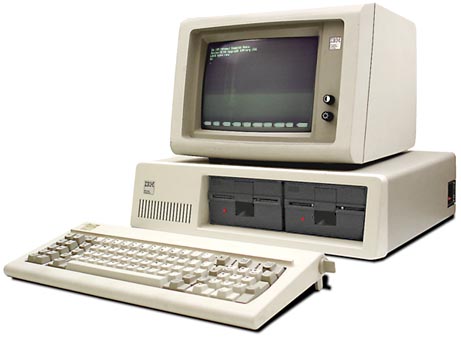
1981 One of the first successful personal computers for businesses, the IBM PC contained a BIOS that was not able to be used by other computer companies (copyrighted). However, over time computer companies began to find ways to copy the technology. One of the interesting aspects of the IBM PC is that it had components produced from other companies. Such components would inclde the central processing unit (CPU) from Intel and the operating system (OS) from Microsoft. However, much of the computer was still produced by IBM like the three expansion slots, which can be used to optimize the computer's performance. The expanded system made for businesses ran for the hefty price of $4,500.
IBM Simon (Digital)
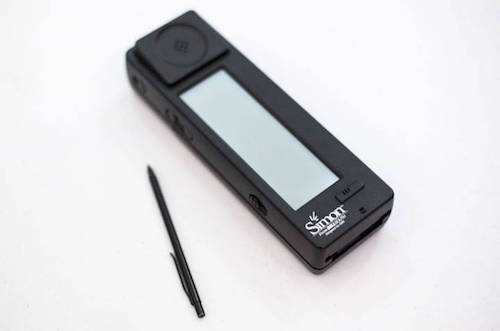
1993 We simply take for granted the power of the smartphones we use today, but earlier on, smartphone features were limited; every little feature was accounted for, and the prices were high. IBM's Simon is often declared as the first smartphone. It included a touch screen with stylus, the ability to send emails and faxes, to-do lists, address book, calculator, sketch pad, and filer. One feature we see in our smartphones today that was exemplified in the Simon was predictive typing; Simon would show you the six most likely letters that you need to complete a word. One of the downfalls of Simon was that its charge did not last very long; the nickel-cadmium battery lasted roughly an hour. The price of the Simon was also a concern, for it was priced at $1,100 upon initial release.